What is GPON? The dominant FTTH standard explained

Contents
GPON (Gigabit Passive Optical Network) is the ITU-T G.984 standard that massively dominates FTTH deployments worldwide, particularly in France where Orange, SFR, Bouygues and Free use it as their main infrastructure. Proposed by the FSAN in 2003, it offers 2.488 Gbps download / 1.244 Gbps upload shared among 32-64 subscribers via a passive splitter.
This guide explains how GPON works, its technical characteristics, its advantages over the alternatives (EPON, point-to-point) and its evolution towards XGS-PON 10G.
What is GPON?
GPON stands for Gigabit Passive Optical Network. It is one of the standards in the PON (Passive Optical Network) family, standardised by the ITU-T under the reference G.984. The architecture is point-to-multipoint (P2MP): a single operator fibre serves several subscribers via a passive optical splitter.
Three elements make up a GPON network:
- OLT (Optical Line Terminal) — active equipment on the operator side
- PLC splitter — passive component (1×32, 1×64, 1×128) in a street cabinet or at the foot of a building
- ONT (Optical Network Terminal) — subscriber equipment, translates the signal into Ethernet/WiFi
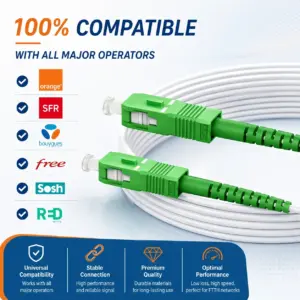
GPON is used by Orange Fibre, Free Fibre, SFR Fibre and Bouygues Bbox Fibre in nearly all of their residential deployments. It is the de facto standard of French FTTH.
Key characteristics of GPON
| Parameter | Value |
|---|---|
| Standard | ITU-T G.984 |
| Download speed | 2.488 Gbps (2.5 Gbps) |
| Upload speed | 1.244 Gbps (1.25 Gbps) |
| DL wavelength | 1490 nm |
| UL wavelength | 1310 nm |
| Max OLT-ONT distance | 20 km (extendable to 40-60 km) |
| Max splitting ratio | 1:128 (typically 1:32 or 1:64) |
| Encapsulation | GEM (GPON Encapsulation Method) |
| QoS | DBA, multi-class (T-CONT 1-5) |
| Security | AES-128 downstream encryption |
| Supported services | Internet, IPTV, VoIP, TDM |
How does GPON work?
Downstream (OLT → ONT)
The OLT broadcasts in broadcast at 1490 nm to all the ONTs connected to the splitter. Each ONT only reads the AES-128 encrypted frames intended for it (identified by its ONT-ID). The total speed of 2.5 Gbps is shared.
Upstream (ONT → OLT)
The ONTs transmit at 1310 nm in time windows allocated by the OLT (TDMA, Time Division Multiple Access). This avoids collisions on the shared fibre. The OLT dynamically allocates bandwidth via DBA (Dynamic Bandwidth Allocation) according to each subscriber's needs.
WDM architecture
The two wavelengths (1490 + 1310 nm) travel simultaneously on the same fibre without interference — this is the principle of WDM (Wavelength Division Multiplexing), which enables full-duplex on a single strand.
Why choose GPON?
- Infrastructure savings — one operator fibre serves 32-128 subscribers (vs 1 fibre/subscriber in point-to-point)
- Rich native QoS — DBA, T-CONT, support for TDM/ATM/Ethernet
- Strong security — mandatory AES-128 downstream encryption
- Scalability — coexistence of GPON + XGS-PON on the same fibre
- Maturity — 20+ years of operator deployments, vast ecosystem
- Advanced OAM — standardised OMCI for remote management
GPON applications
Typical use cases:
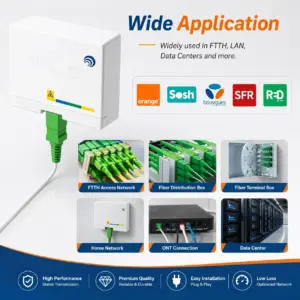
- Residential FTTH — Internet + IPTV + VoIP triple-play
- FTTB — fibre to the building, internal distribution via G.fast
- Multi-site enterprise networks — sharing of operator fibres
- Hospitality / camping — Internet + TV distribution across multiple rooms
- University campuses — fibre backbone covering several buildings
Evolution: XGS-PON, NG-PON2, 50G-PON
| Standard | DL/UL speed | GPON coexistence | Status 2026 |
|---|---|---|---|
| GPON | 2.5 / 1.25 Gbps | Reference | Active standard |
| XG-PON | 10 / 2.5 Gbps | Yes (WDM) | Transition |
| XGS-PON | 10 / 10 Gbps | Yes (WDM) | Migration in progress |
| NG-PON2 | 40 Gbps (4×10G) | Yes (TWDM) | Niche |
| 50G-PON | 50 / 12.5 or 50 Gbps | Yes | Emerging |
French operators are gradually migrating towards XGS-PON to offer 8 Gbps or even 10 Gbps plans (Freebox Ultra, Orange Livebox 7, Bouygues Bbox 8x). The coexistence of GPON + XGS-PON on the same fibre allows a gradual migration without changing the network.
Elfcam components compatible with GPON
Elfcam hardware for GPON
- PLC splitters 1×4, 1×8, 1×16, 1×32, 1×64 — compatible with GPON and XGS-PON
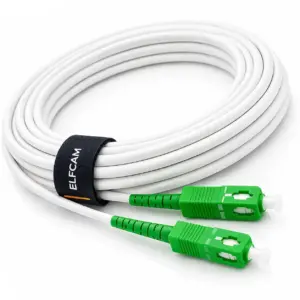
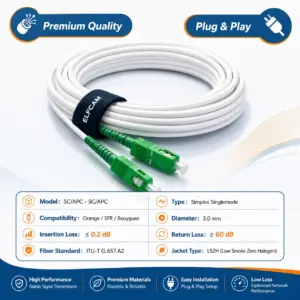
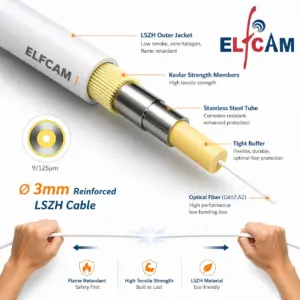
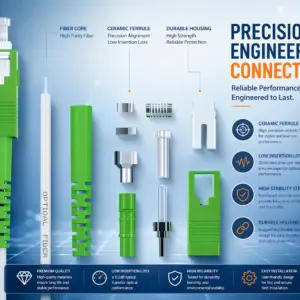
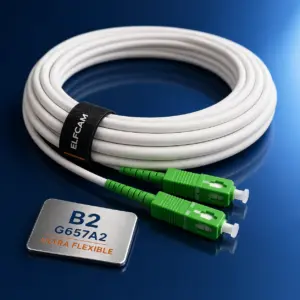
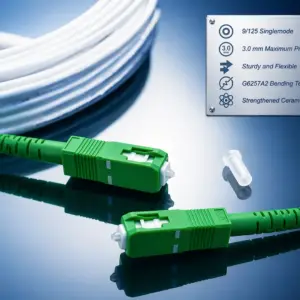
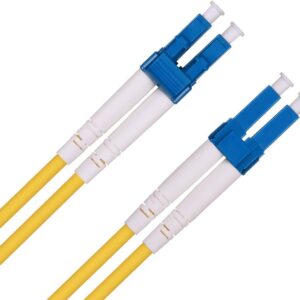
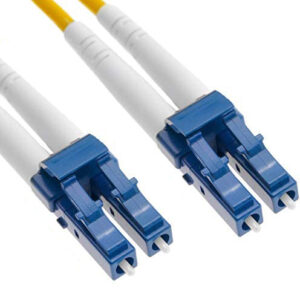
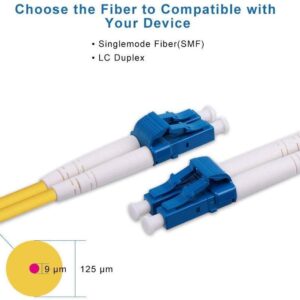
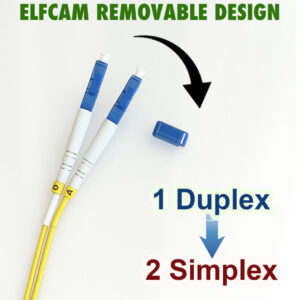
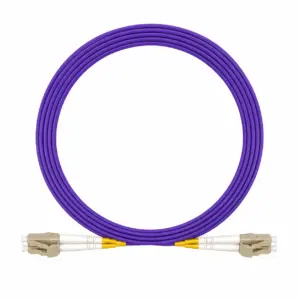
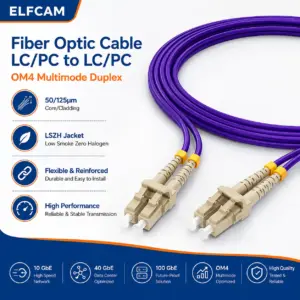
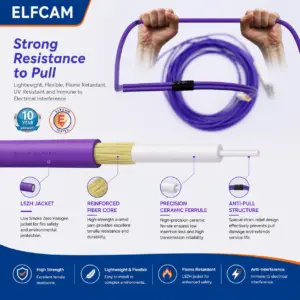
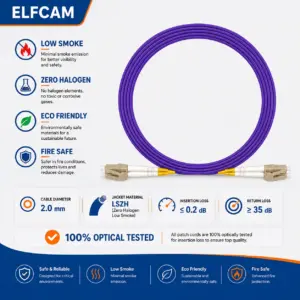
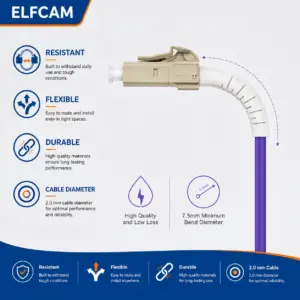
- OS2 fibre cables and SC/APC patch cords
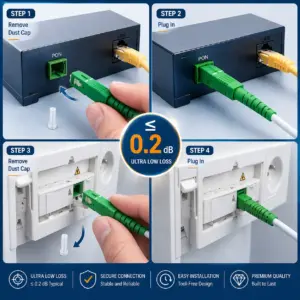
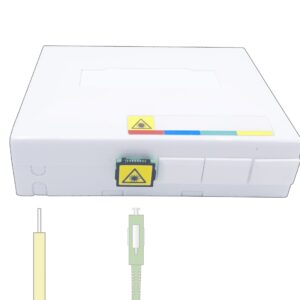
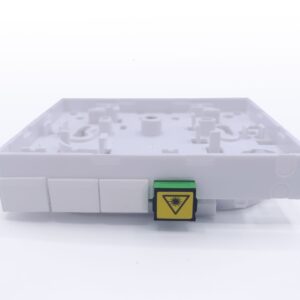
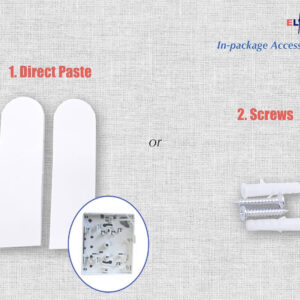
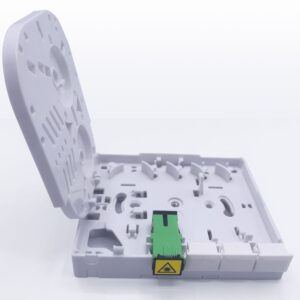
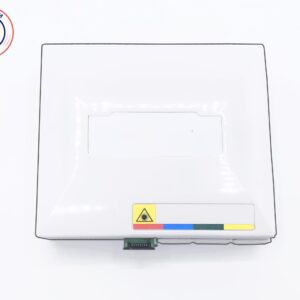
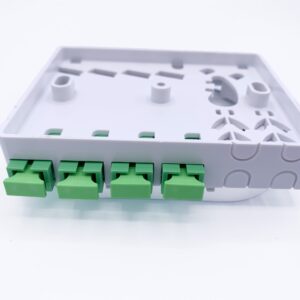
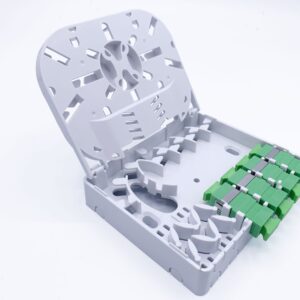
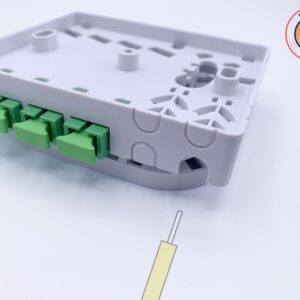
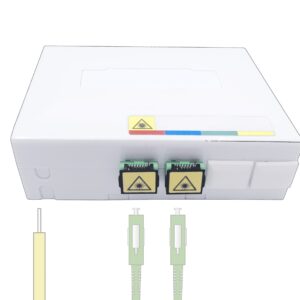
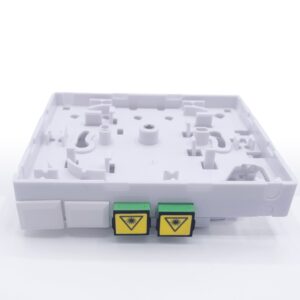
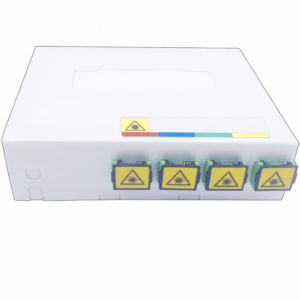
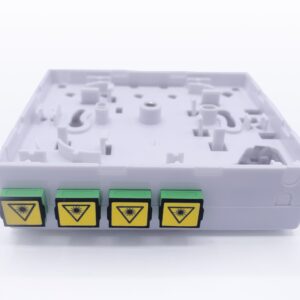
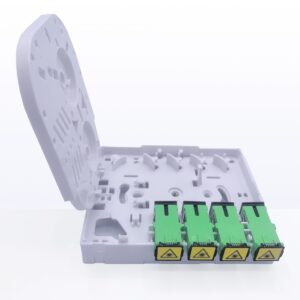
- Replacement PTO on the subscriber side
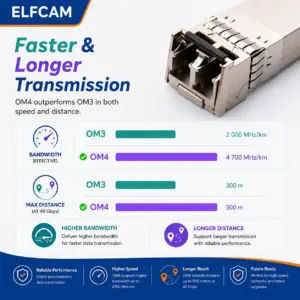
- SFP+/SFP28 modules for OLT uplink
- 19" rack ODF trays for central distribution



FAQ — GPON
1GPON or XGS-PON for my home?
2Why is GPON dominant in France?
- ITU-T standard recognised worldwide, vast ecosystem
- Rich QoS essential for multicast IPTV (Orange TV, Free TV)
- AES-128 security mandatory for operator data
3How many subscribers on a GPON splitter?
4Maximum OLT-ONT distance in GPON?
5Does GPON withstand power outages at the subscriber's premises?
6Can GPON and EPON be mixed on the same OLT?
7Does IPTV work well over GPON?
8Where to buy GPON splitters and accessories?
In summary
GPON is the dominant FTTH standard in France and Europe: 2.5/1.25 Gbps, 1:64 splitter, 20 km distance, rich QoS, AES-128 encryption. For new deployments, aim for XGS-PON (10G symmetrical) in coexistence on the same fibre.
Browse our compatible PLC splitters, OS2 cables and SFP+ modules for your GPON and XGS-PON deployments.