GPON ONU, ONT and OLT : the 3 key FTTH components

Contents
A GPON (Gigabit Passive Optical Network) network relies on three main components : the OLT on the operator side, the passive PLC splitter in the middle, and the ONU/ONT on the subscriber side. Understanding their respective roles is essential to deploy or maintain an FTTH network.
This guide explains GPON ONU, ONT and OLT in detail : their functions, their differences, their typical configurations and how to combine them for a complete FTTH deployment.
GPON overview
Point-to-multipoint (P2MP) architecture :
- OLT (Optical Line Terminal) — at the operator central office
- ODN network (Optical Distribution Network) — fibers + PLC splitters, 100% passive
- ONU/ONT (Optical Network Unit / Terminal) — subscriber equipment
A single operator fiber serves 32 to 128 subscribers via the passive splitter. It is this pooling that makes FTTH economical on a national scale.
ONU vs ONT : what's the difference ?
The terms ONU and ONT are often used interchangeably, but there is a technical distinction :
| ONU (Optical Network Unit) | ONT (Optical Network Terminal) | |
|---|---|---|
| Standard | IEEE / EPON | ITU-T / GPON |
| Function | Converts optical signal → Ethernet | Same + sometimes box functions (router, WiFi, VoIP) |
| Typical use | Asia, alternative operators | Europe, major operators |
| Operator box (Livebox, Freebox) | Rarely | Often integrated |
In practice, both designate the terminal equipment on the subscriber side. In France and Europe, "ONT" is dominant ; in Asia and among alternative operators, "ONU" is more common.
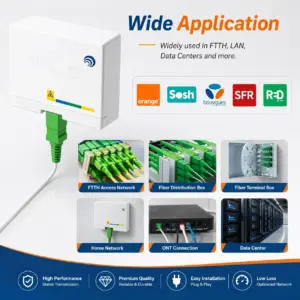
When your operator delivers a "Livebox Fibre" or "Freebox", it usually integrates an ONT inside. You can also have an external ONT (white box) connected to your box via Ethernet.
Types of ONU/ONT by use case
| ONU/ONT type | Typical configuration | Use case |
|---|---|---|
| Simple Ethernet ONU | 1× SC/APC + 1-2× RJ45 | External operator box connection |
| WiFi ONU | + integrated WiFi 4/5/6 | Residential FTTH without a separate box |
| PoE ONU | + 2-4× PoE ports | IP cameras, powered WiFi APs |
| CATV ONU | + 1× coaxial RF output | Hotels, analog TV distribution |
| Triple-play ONU | Ethernet + WiFi + POTS (RJ11) | Internet + IPTV + VoIP |
| Reverse PoE ONU | Powered by a remote PSE | Areas without a mains socket |
| Industrial ONT | Rugged enclosure -40°C/+70°C | Outdoor, mobile telecom |
Elfcam V2804RGT example : GPON ONU 1 Gigabit Ethernet + 3 Fast Ethernet + CATV. Compatible with IEEE 802.3ah, supports NAT, firewall, VLAN, DHCP server, IGMP snooping.
OLT : the brain on the operator side
The OLT (Optical Line Terminal) is the central active device that manages communication with all subscriber ONU/ONT via the passive ODN network.
Key OLT functions
- Electrical ↔ optical conversion on the PON ports (1490 nm down, 1310 nm up)
- TDMA multiplexing to manage the ONT transmission windows
- Authentication of ONT (serial number, MAC)
- QoS / DBA (Dynamic Bandwidth Allocation)
- Dynamic L3 routing (RIP, OSPF) for advanced models
- Ethernet uplink to the network core (10G SFP+, 25G SFP28)
Typical OLT configurations
- Mini OLT 1-2 PON ports : hotels, small campuses (128 subscribers max)
- OLT 4-8 ports : local alternative operators, multi-dwelling buildings
- OLT 16 ports : urban operators, universities
- Modular chassis OLT : national operators, metropolitan areas
- Outdoor OLT : installation in a street cabinet or on a pole (-40°C/+70°C, dual power supply, integrated EDFA)
Upstream/downstream data flows
Downstream (OLT → ONT)
The OLT transmits at 1490 nm in broadcast to all ONT on the splitter. Each ONT reads only the AES-128 encrypted frames destined for it (identified by its ONT-ID). Total bandwidth 2.488 Gbps shared.
Upstream (ONT → OLT)
The ONT transmit at 1310 nm within time windows allocated by the OLT (TDMA). The OLT dynamically allocates the bandwidth (DBA) according to each subscriber's needs. Total bandwidth 1.244 Gbps shared.
WDM : a single fiber, two directions
The wavelengths 1490 nm (down) and 1310 nm (up) travel simultaneously on the same fiber without interference — this is the principle of WDM (Wavelength Division Multiplexing). It enables full-duplex on a single fiber strand.
Complete GPON deployment architecture
- OLT in a technical rack (19" rack 1U-2U)
- Uplink to the core switch via SFP+ 10 Gbps
- OLT PON port → SC/APC patch cord to patch panel
- Patch panel → single-mode OS2 fiber to the distribution area (PBO, street cabinet)
- PLC splitter 1×32 or 1×64 in the PBO
- Individual fibers → PTO (Optical Termination Outlet) of each subscriber
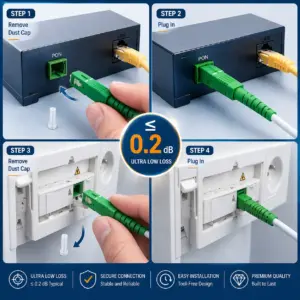
- PTO → SC/APC patch cord → ONT (or operator box with integrated ONT)
Elfcam components for a complete GPON deployment
- PLC splitters 1×4 to 1×64 GPON-compatible
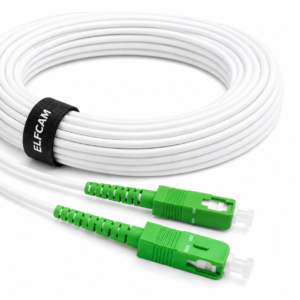
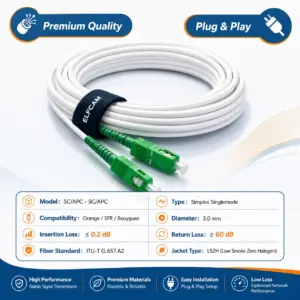
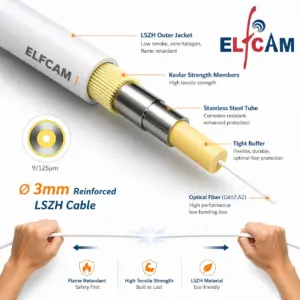
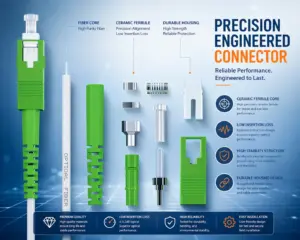
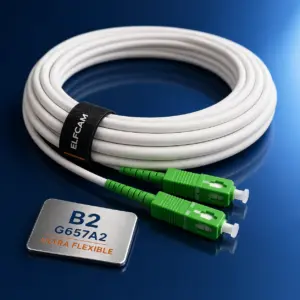
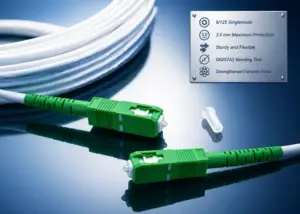
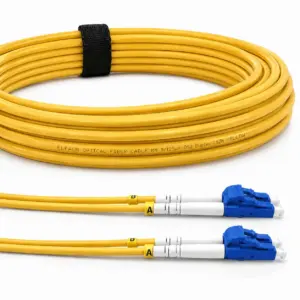
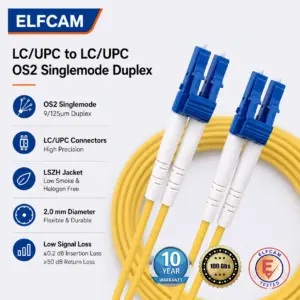
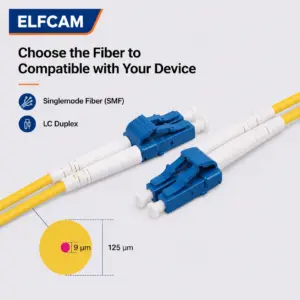
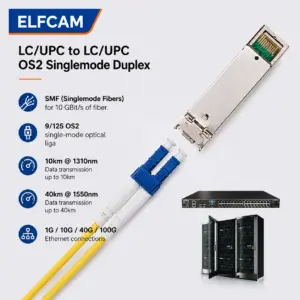
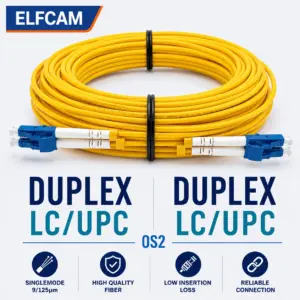
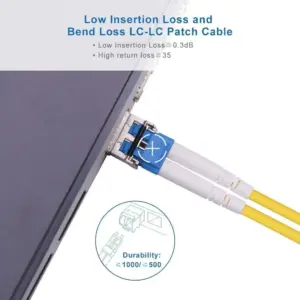
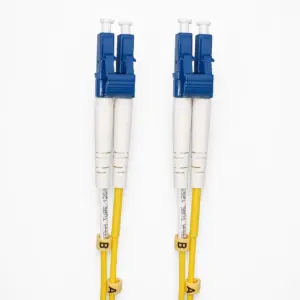
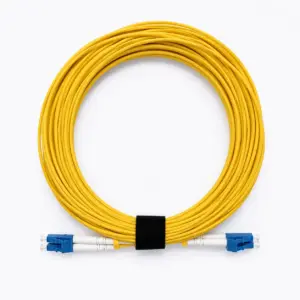
- OS2 fiber cables and SC/APC patch cords
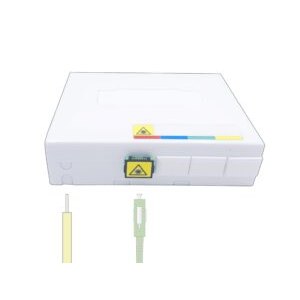
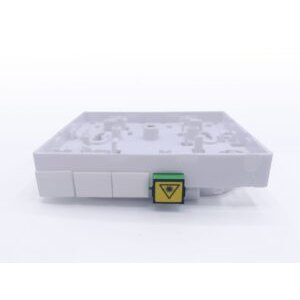
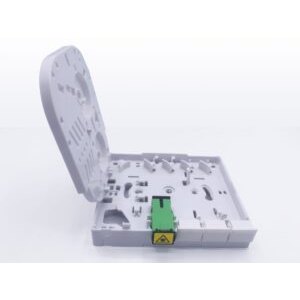
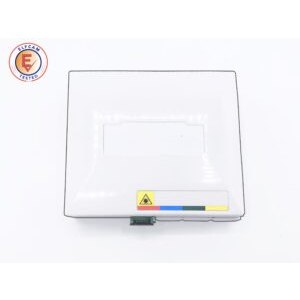
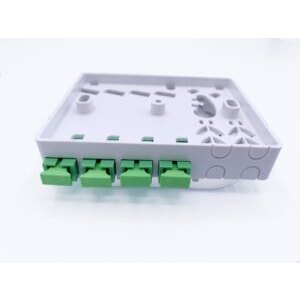
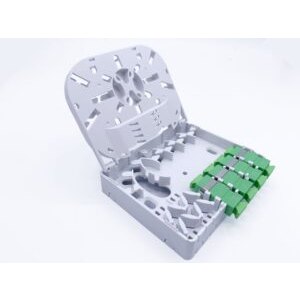
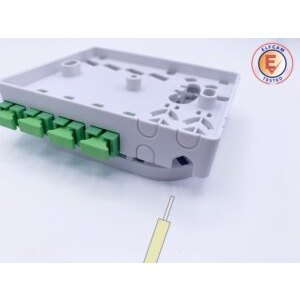
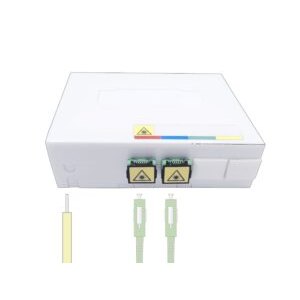
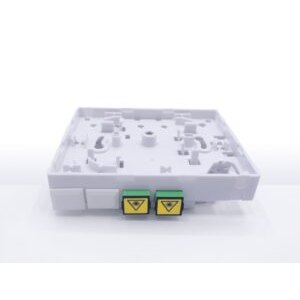
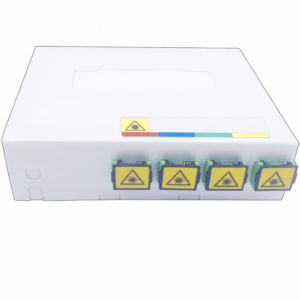
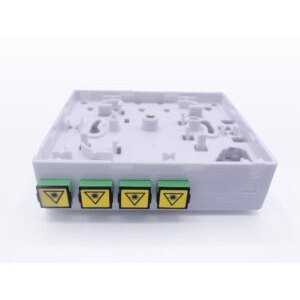
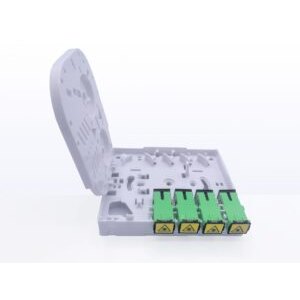
- PTO on the subscriber side
- SFP+/SFP28 modules OLT uplink
- 19" ODF rack trays




FAQ — GPON ONU, ONT and OLT
1Does my operator provide ONU or ONT ?
2Can the operator ONT be replaced with a third-party ONT ?
3How many ONT per OLT ?
4What is the maximum distance between OLT and ONT ?
5Does the ONT consume a lot of electricity ?
6What happens in the event of an OLT failure ?
7Outdoor OLT, is it reliable ?
- IP65 enclosure sealed against dust/water
- Dual independent power supply (resilience)
- Integrated EDFA (optical amplification for long distances)
- Lightning protection
8Where to buy ONU/ONT and OLT ?
In summary
A GPON network relies on 3 components : OLT (operator, manages 128+ subscribers), PLC splitter (passive), and ONU/ONT (subscriber, converts the signal into Ethernet). Understanding their roles allows you to properly size a residential or professional FTTH deployment.
For your GPON installations, check out our PLC splitters, fiber cables and SFP+ modules compatible with all operators.