FTTx : what is the difference between ONU and ONT ? 2026 Guide
Contents
You have ordered fiber : your operator talks about an ONT, your neighbor about an « ONU », your box has an SFP port, and an installer mentions an « HGU ». Multiplying acronyms, overlapping abbreviations, competing standards : FTTH terminology is a minefield.
The problem : when the time comes to replace the supplied equipment, migrate to another operator or deploy an SFP ONU in your own box, knowing what you are buying is crucial. This guide untangles the difference between ONU and ONT, their role in a PON network, the sub-types (SFU, HGU, MDU), and helps you choose the right equipment for your home fiber network.
Definitions : ONU and ONT
The difference comes down to two standardization bodies :
- ONU (Optical Network Unit) : terminology from the IEEE (802.3 / EPON standards)
- ONT (Optical Network Terminal) : terminology from the ITU-T (G.984 / GPON, G.9807 / XGS-PON standards)
In practice, both refer to the same equipment : a subscriber terminal that converts the optical signal into an electrical signal (Ethernet, telephone, TV). The subtlety : an ONT is strictly « at the user's premises », whereas an ONU can be deployed further upstream, in a duct or a technical room.
In short : ONT = ONU deployed directly at the subscriber's premises. An ONT is always an ONU, but an ONU is not always an ONT.
How they work in a PON network
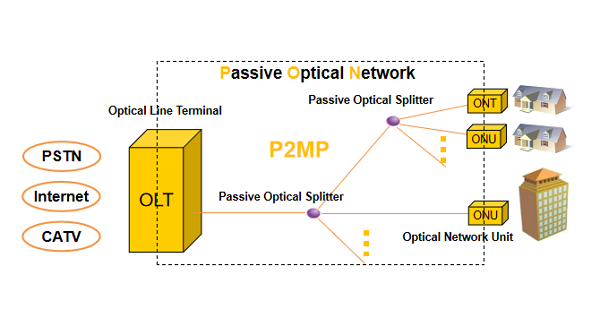
A passive optical network (PON) connects several subscribers to a single central equipment (OLT, Optical Line Terminal) over a single shared fiber strand thanks to a passive splitter (often 1:32 or 1:64). This point-to-multipoint architecture massively reduces the deployment cost compared with a dedicated link per subscriber.
| Element | Location | Role |
|---|---|---|
| OLT | Operator side (NRO) | Fiber termination on the core side, manages 1 to 16 PON ports |
| Passive splitter | In a duct or street cabinet | Splits the signal 1:32 or 1:64 without electronics |
| ONU/ONT | At the subscriber or in a technical room | Converts optical ↔ Ethernet, terminates the fiber |
| PTO | Subscriber's wall | Optical termination outlet, connects the patch cord to the ONT |
The ONU/ONT buffers the Ethernet data coming from the subscriber, then transmits it to the OLT during the time window allocated to it (TDMA upstream). It also receives the downstream data destined for its identifier, decodes it and delivers it to the Ethernet ports and services (VoIP, TV).
For a professional PON installation, you will also need BiDi GPON/EPON SFP modules on the OLT side and 1:32 PLC splitters on the distribution side.
Where are they deployed ?
ONU : terminal upstream of the user
In its strict version, the ONU is often placed in a shared technical room : stairwell, operator room at the foot of a building, cabinet in a corridor. It can then serve several subscribers via Ethernet (Cat 6 cable) or CATV.
ONT : at the subscriber's premises
The ONT is installed directly in the home, connected to the PTO (optical termination outlet) via an SC/APC fiber patch cord. This is the case for the Freebox, Livebox and SFR Box fiber boxes, and for almost all residential FTTH deployments in France.
Special case : SFP ONU in your own box
Some recent boxes (Freebox Delta/Ultra, Mikrotik, pfSense) accept an ONU in SFP format directly in their SFP cage. This avoids having a separate external ONT, reduces power consumption and simplifies cabling. It requires the operator to authorize the replacement and the box to support the operator LOID/SLID/credentials.
Types of ONU : SFU, HGU, SBU, MDU, MTU
Depending on the deployment context, several variants are distinguished :
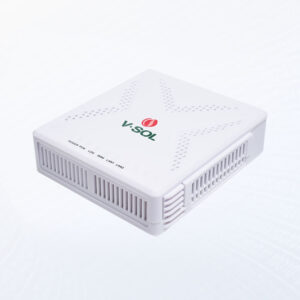
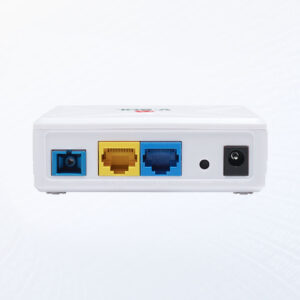
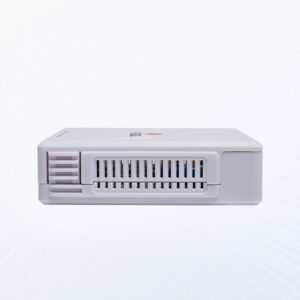
- SFU (Single Family Unit) : a simple ONU for a single home. Delivers 1 to 4 Ethernet ports and possibly POTS. The router is separate.
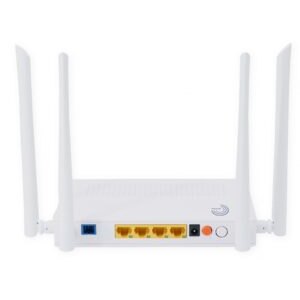
- HGU (Home Gateway Unit) : an « all-in-one » ONU that integrates a router, WiFi, and sometimes VoIP. It is the equivalent of a complete fiber box.
- SBU (Single Business Unit) : the equivalent of the SFU for a small office or a micro-business, often with priority QoS.
- MDU (Multi Dwelling Unit) : a floor/building ONU, which serves several homes in cascade via Ethernet.
- MTU (Multi Tenant Unit) : the equivalent of the MDU but for shared offices (coworking, office tower).
For a single-family home, the two common choices are SFU + mesh router (maximum flexibility) or all-in-one HGU (simplicity).
The HGU ONU : the all-in-one FTTH terminal
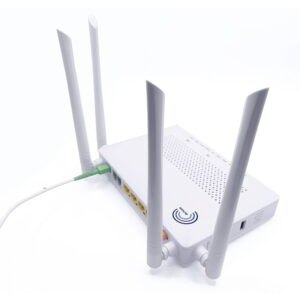
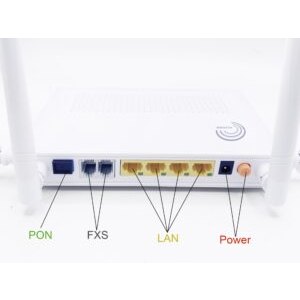
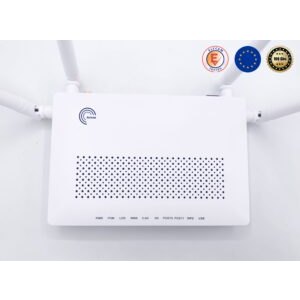
The HGU ONU (Home Gateway Unit) is the most widespread category in residential FTTH because it integrates :
- 1 PON port (GPON or EPON depending on the model)
- 4 Gigabit Ethernet ports (or 2.5 Gb on recent models)
- 1 POTS port (RJ11 telephone for operator VoIP)
- WiFi 5 or WiFi 6 integrated
- USB 2.0/3.0 for storage sharing
- NAT routing, DHCP, firewall
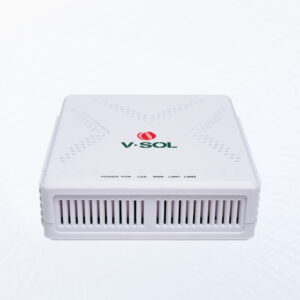
Example : the V-SOL 4GE+1POTS+1USB3.0+WiFi 6 HGU (Ref:7011) offers exactly this configuration with WiFi 6. A deployment strategy similar to an SFU, except that the ONU and Residential Gateway (RG) functions are merged into a single unit — which reduces cabling and simplifies maintenance.
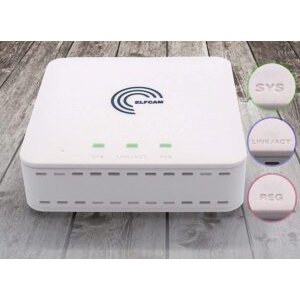
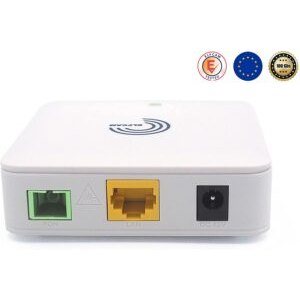
Recommended Elfcam ONU/ONT
- V-SOL HGU 4GE+POTS+WiFi 6 (Ref:7011) — modern all-in-one FTTH with WiFi 6
- V.SOL ONU GPON/EPON 1GE + 2.5GbE (Ref:6965) — multi-gig SFU to replace a slow box
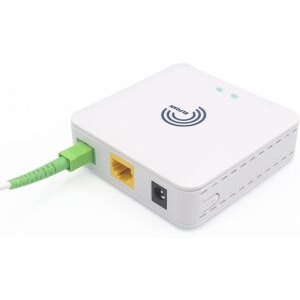
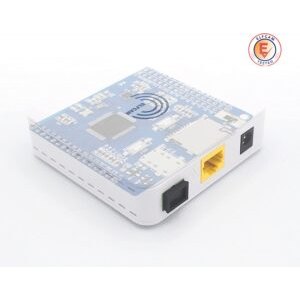
- Elfcam 1GE ONU GPON/EPON SC/APC (Ref:6404) — budget SFU, pro / lab use
- Fiber Ethernet converters — alternative solution for FTTB / point-to-point
Operator compatibility and installation
Replacing the ONT/HGU supplied by the operator with a third-party model depends on several factors :
- PON standard : does your operator use GPON (Orange, SFR, Bouygues) or XGS-PON (Free Delta/Ultra, some pro offers) ?
- Credentials : some operators require the injection of a LOID (Logical ONU ID) or an SLID (Subscriber Location ID) from the ONT. If the operator refuses to provide it, the replacement is impossible.
- Triple-play services : if you want to keep VoIP and TV (IGMP multicast), not all ONUs support them in the same way.
- VLAN and IPoE/PPPoE : operators tag their services (internet, TV, VoIP) on separate VLANs. Configuration is mandatory on the ONU/router side.
France : limited freedom of termination
In France, only Free officially allows replacing the box with third-party equipment (Freebox Delta/Ultra + SFP ONT). Orange, SFR, Bouygues impose the operator box through technical means (proprietary credentials) or contractual ones. Check with your operator before buying a third-party ONU.
Criteria for choosing your fiber terminal
- Target throughput : GPON 2.5/1.25 Gbps or XGS-PON 10 Gbps symmetric ?
- Number and type of Ethernet ports : 4×Gigabit is enough, but 2.5 or 10 Gb is desirable for fiber > 1 Gbps
- Fiber connector : SC/APC is the FTTH standard in France, SC/UPC is rarer
- Integrated WiFi : WiFi 5 is fine, WiFi 6 recommended, WiFi 7 on the high end
- POTS : necessary if you keep an operator VoIP landline phone
- Operator compatibility : LOID, SLID, VLAN, multicast services
- Form factor : standalone unit or SFP module to plug into your box
- Power consumption : HGUs consume 8-15 W, SFUs only 3-5 W
For a complete installation, complement it with SC/APC fiber patch cords, a wall-mounted PTO, and Cat 6/7 Ethernet cables for your devices.
FAQ — ONU, ONT and FTTH terminals
1ONU and ONT, are they the same thing ?
2What is the difference between SFU and HGU ?
- SFU : just the fiber terminal. You connect your router behind it (more flexibility, ideal if you have a WiFi 6 mesh router)
- HGU : fiber terminal + router + WiFi + VoIP in a single unit (simpler, equivalent to a box)
3Can I replace my operator's ONT in France ?
- Free (Freebox Delta/Ultra) : yes, official support for third-party SFP ONT
- Orange, SFR, Bouygues : technically possible but not contractually authorized, they require their LOID/credentials
- Pro/RIP operators : often yes, contact your operator
4GPON or EPON : which to choose for my ONU ?
- France, Europe, USA : GPON is overwhelmingly dominant (ITU-T G.984)
- China, Japan, Korea : EPON historically dominant
5What maximum throughput does a GPON ONU support ?
6How do I activate the ONU with the operator ?
- Connect the ONU to the PTO via an SC/APC patch cord
- Power the ONU and wait for the PON LEDs to become steady (1-3 min)
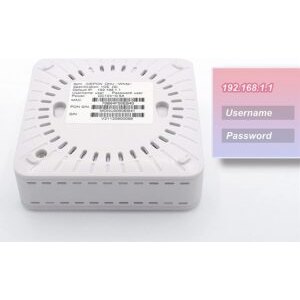
- If required by the operator : access the admin interface, inject the LOID or SLID provided by the operator
- Configure the VLANs for internet (sometimes 835 at Orange, 100 at Free, etc.)
- Wait for synchronization and test with a direct Ethernet cable
7Does an HGU ONU replace my WiFi box ?
8Shipping and warranty on Elfcam ONU/ONT ?
In summary
In practice, ONU and ONT refer to the same equipment : the subscriber's fiber terminal that converts optical into Ethernet. The difference is historical (IEEE vs ITU-T) and geographical (EPON vs GPON). In terms of usage, it is the SFU / HGU / MDU choice that really matters.
For domestic FTTH use, an all-in-one WiFi 6 HGU is the simple choice. For an advanced setup (mesh router + 10G switch + PoE cameras), favor an 2.5 GbE SFU and add your own WiFi 6 Mesh router. In all cases, check compatibility with your operator before any purchase.